U-Roy and the birth of the deejay
Somebody talking over a record was not a new idea. Doing it so well that the talking became the record was, and one man on King Tubby's sound worked out how.
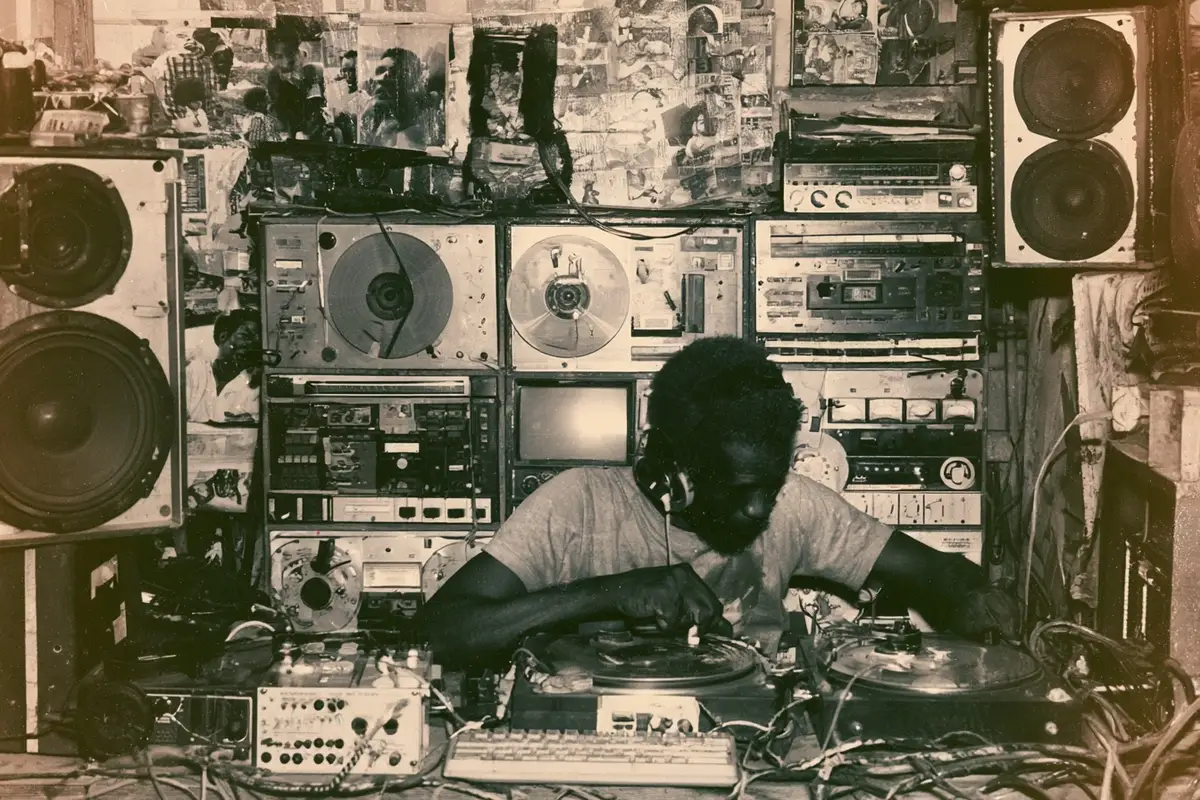
The deejay’s job on a sound system was to keep the dance moving: introduce the tune, raise the crowd, fill the gap while the selector found the next record. It was a functional role and nobody thought of it as authorship.
Ewart Beckford, who worked the microphone on King Tubby’s Home Town Hi-Fi as U-Roy, did something to that job which is hard to describe without sounding like hyperbole. He made it musical.
What was different
Plenty of people talked over records. What U-Roy brought was phrasing. He treats the rhythm as something to play against rather than something to shout over: coming in late, leaving a bar empty, answering a line the singer has just sung, riding the bass rather than fighting it.
He also had the instincts of somebody who had spent years watching crowds. He knows exactly when to introduce a tune and exactly when to shut up and let the bass work. That restraint is the part later imitators most often missed.
1970
Duke Reid put him in the studio over rocksteady rhythms from the Treasure Isle back catalogue, records that were already several years old and already loved. Voicing them again was, in commercial terms, recycling.
The results dominated the Jamaican charts to a degree that reads like a misprint. The audience did not experience these as old records with talking on top. They experienced them as new records, which is exactly the logic the version had been quietly teaching everyone for years.
The inheritance
Everything downstream of this is enormous and mostly untraceable in detail. Deejay records became a form in their own right in Jamaica. The practice travelled with the music to Britain and to New York, and what happened next in the Bronx is not a coincidence, whatever else it also was.
Closer to home, U-Roy’s approach is the reason a good selector still knows that the microphone is an instrument and that the most powerful thing you can do with it is sometimes to put it down.