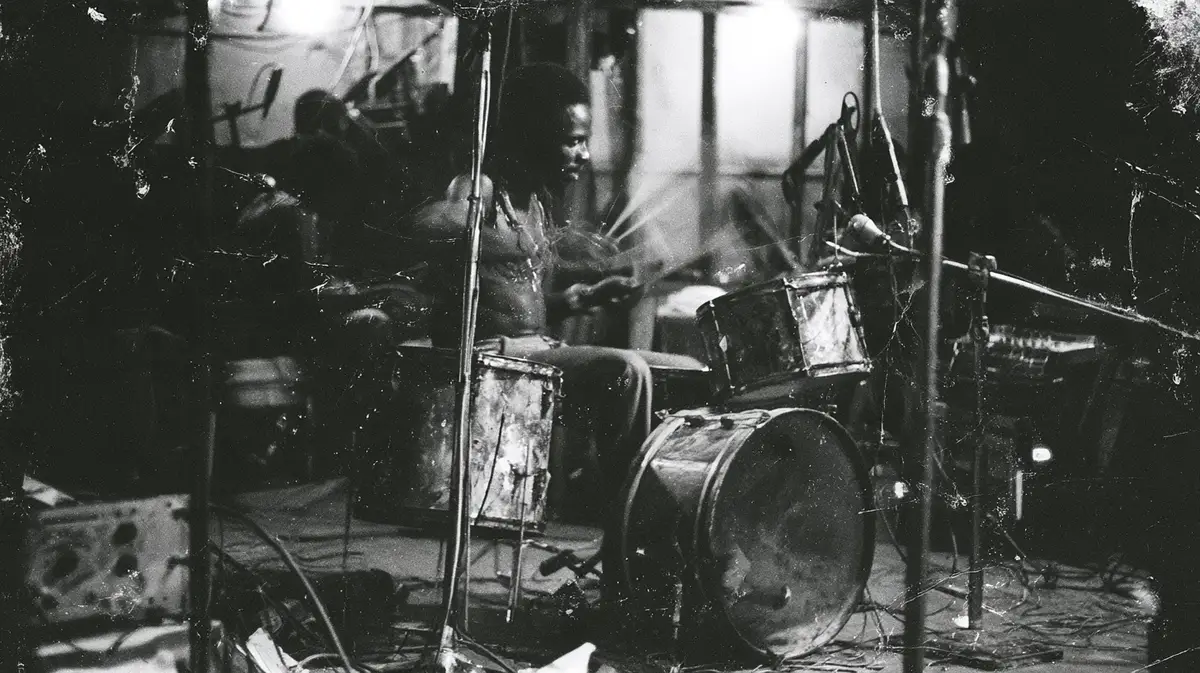
The mixing desk became an instrument
In a small room in Waterhouse, King Tubby stopped using a mixing desk to balance records and started using it to play them. Everything we call dub comes out of that decision.
The story usually gets told as an accident. A cutting engineer leaves the vocal off a disc, the crowd goes for it, and dub is born. Like most origin stories that fit in one sentence, it flattens something that actually took years and a particular kind of mind.
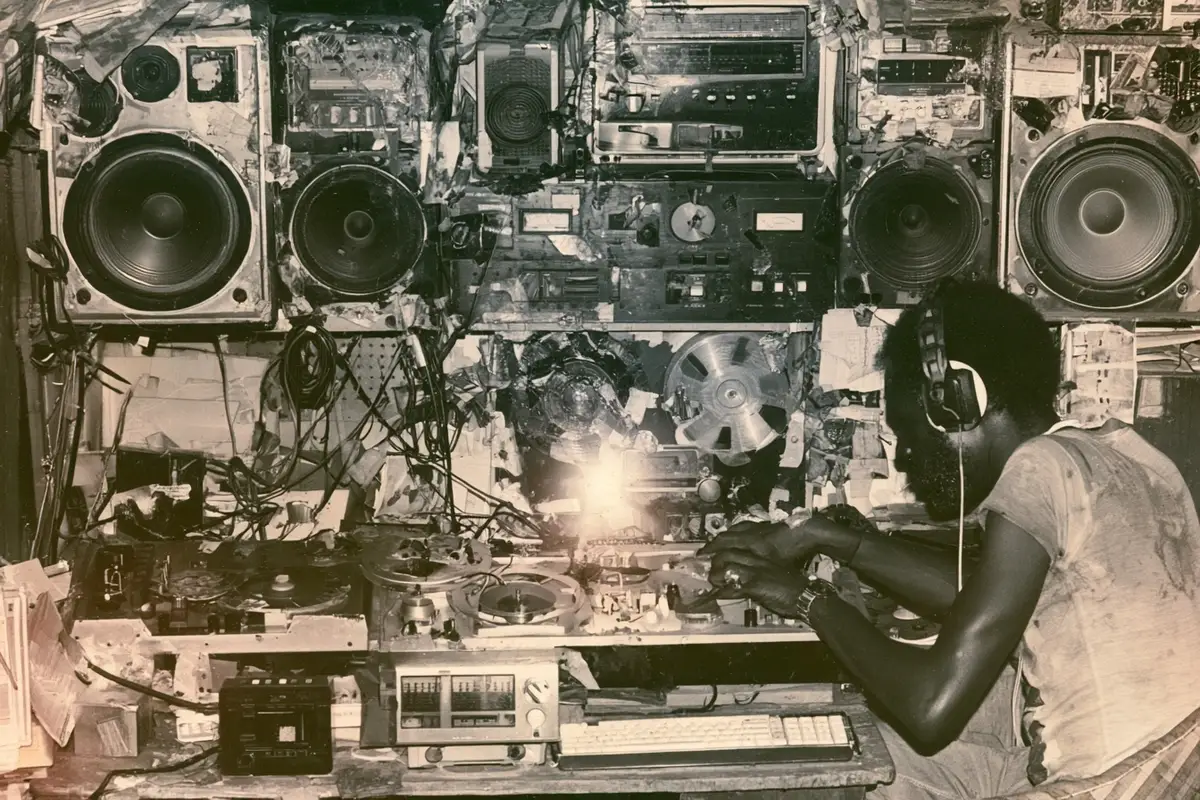
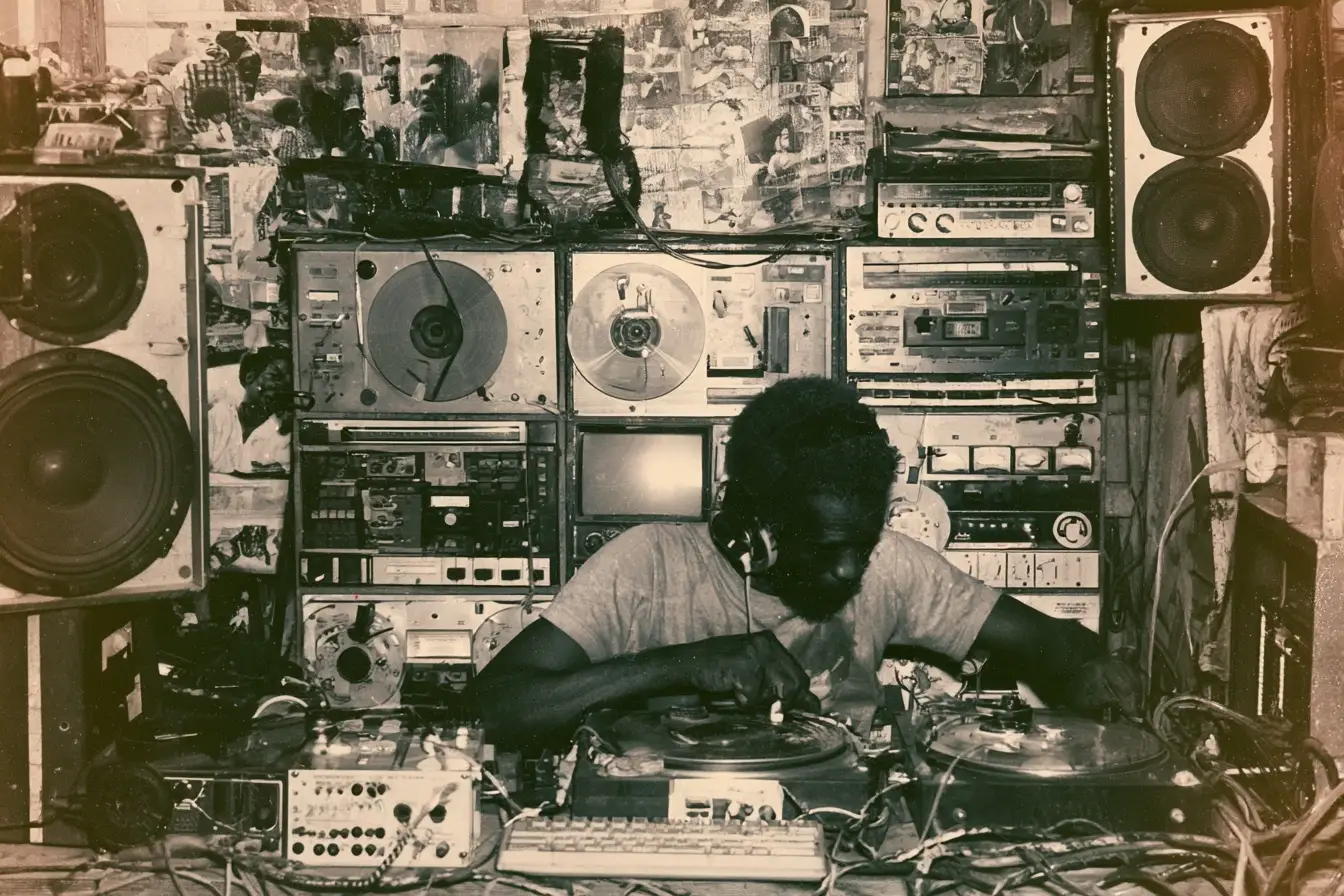
What matters is not that someone once dropped a vocal. It is that Osbourne Ruddock, working out of a room at 18 Dromilly Avenue in Waterhouse, Kingston, came to treat the mixing desk as something you perform on. He was an electronics man first. He built amplifiers, repaired radios, and ran his own sound system, Tubby’s Home Town Hi-Fi. He understood the signal path in a way most producers did not, and he had somewhere to test what he made on a live crowd the same week he made it.
Subtraction as composition
The essential move in dub is taking things away. A rhythm track that arrives complete gets stripped back to drum and bass, and the other parts are let back in briefly, one at a time, treated so heavily they arrive as gestures rather than performances. A horn line becomes a single stab trailing a long tail. A vocal becomes one word, repeated by the delay until it stops meaning anything and becomes rhythm.
Done badly this is just a remix with holes in it. Done as Tubby did it, the absences carry as much weight as the sounds. You are made aware of what should be there, which puts you in a strange, alert state as a listener. It is closer to how a good dramatist uses an offstage event than to anything else in popular music of the time.
The tools were not the point, but they helped
The room had a modified mixing console, a spring reverb unit, and tape delay. The high pass filter Tubby used to sweep the low end out of a track and then dump it back in has been imitated ever since. None of this equipment was exotic in itself. What was unusual was the willingness to abuse it: to overdrive the reverb until it crashed, to feed delay back on itself until it howled and then to catch it just before it tipped over.
Because the desk was operated live, with hands on faders and no automation, every mix is a performance that could have gone another way. This is why multiple dub versions of the same rhythm are worth hearing rather than redundant. They are takes, not edits.
What it gave to everyone else
The engineers who passed through that room or worked in its shadow, Scientist among them, carried the method outward. So did the producers who came to Tubby with rhythm tracks and left with something they had not imagined. His 1976 collaboration with Augustus Pablo, King Tubbys Meets Rockers Uptown, is still the record most often used to explain dub to someone who has never heard it.
The wider inheritance is harder to trace but larger. The idea that a recording is raw material for further work, that the studio itself is an instrument, and that space and absence can be arranged as deliberately as notes: these are now assumptions in most of recorded music. They were not assumptions in Kingston in 1972. They were one man’s way of working, tested every weekend on a crowd that would tell him immediately if he was wrong.