The dance is the point
Roots and dub were never really album music. They were built for a room, a stack of speakers and a selector who knows what the crowd needs before the crowd does.
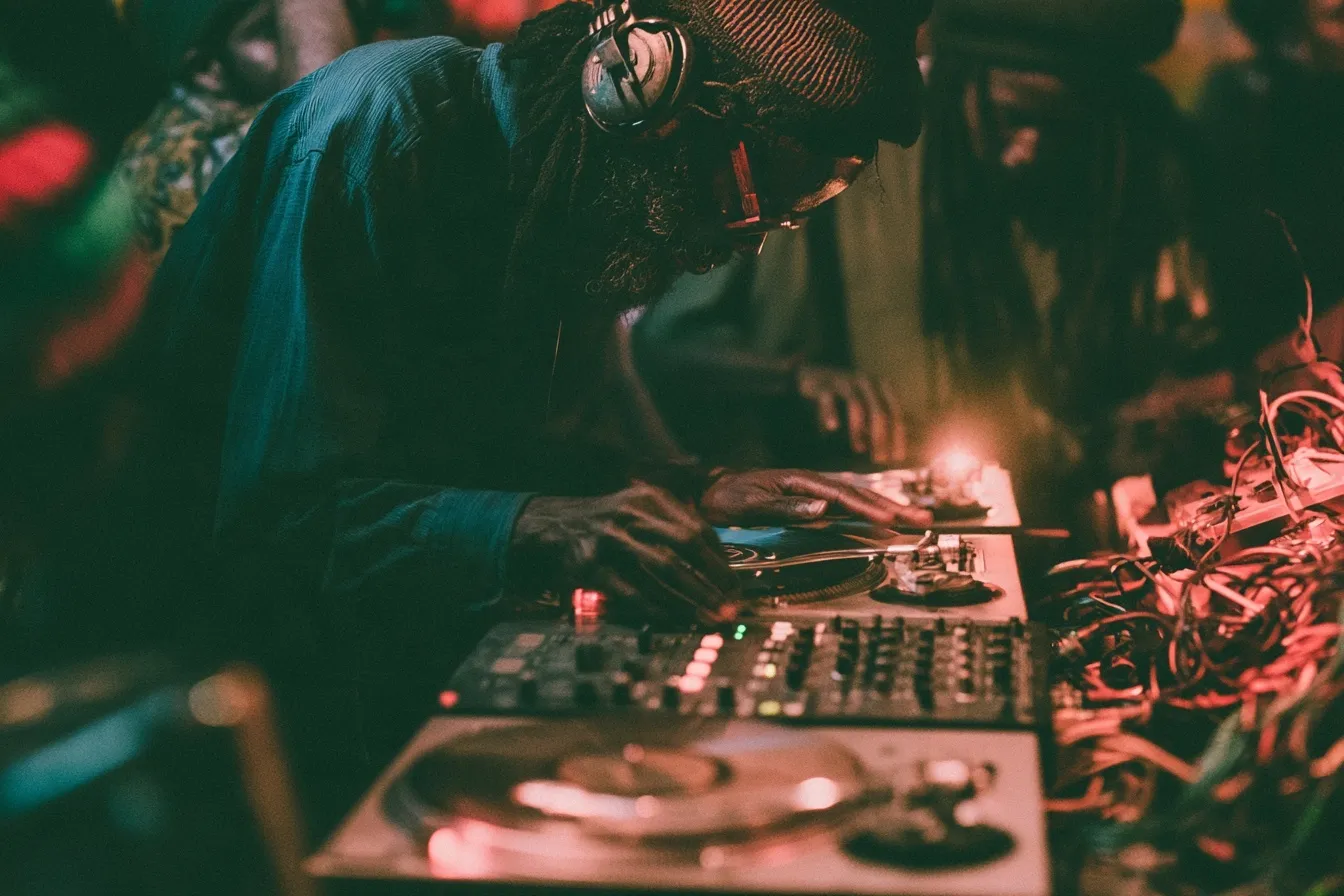
You can own every record and still not have heard the music. That sounds like the sort of thing people say to make a scene feel exclusive, but with roots and dub it happens to be true, and for a plain physical reason. These records were mixed for a system that does not exist in your house. The bass they were built around sits below where a pair of domestic speakers gives up. On a proper sound you do not hear it so much as stand inside it.
Everything else follows from that. The long instrumental passages that seem indulgent on headphones are the parts where the room takes over. The sudden drop, where the engineer pulls everything but the drum and bass, is not a studio trick: it is a question asked of a crowd, and in a good dance the crowd answers.
The selector is not a DJ
In sound system culture the roles are split. The deejay talks on the microphone. The selector chooses the records and rides the controls. That second job is the one that decides whether a night works, and it has almost nothing to do with beatmatching.
A selector reads the room in real time. They can feel when the crowd is being asked to give too much too early, and they will hold a tune back for another hour. They will pull a record off after sixteen bars because it landed wrong, and rewind one that landed right, because a rewind is not showing off, it is agreement made audible.
The equipment is set up for exactly this. One turntable is common. The mixer has a custom pre-amp with wide sweeping controls so the selector can lift the bass out of a tune, strip the top off it, and push it back in when the moment arrives. On a valve pre-amp, turning the bass up does not just make it louder, it changes the character of the note. The record is raw material. The dance is the finished work.
The room does half the mixing
Engineers in Kingston knew where their records would be played, and they mixed for it. Reverb and delay were not decoration, they were the way space got built into a track before it ever reached a hall. Play the same record on a big system in a low ceilinged room and the tails from those effects fold into the room’s own reflections. That is partly why two dances with the same box of records sound nothing alike.
It also explains something people find strange about dub records, which is how much silence is in them. On a small speaker the gaps sound like something is missing. On a sound system, the gaps are where the bass is still moving through the room and through you. They are not empty at all.
Why it survives
Every few years someone declares sound system culture finished, usually after a licensing change or a venue closure, and every few years another generation builds boxes in a garage and starts again. It survives because it offers something a streaming queue cannot: a specific set of people, in a specific room, hearing music that has been selected for them in that hour and cannot be paused.
If you have only ever met this music through speakers you own, you have met a photograph of it. Find a dance. Stand somewhere near the middle, a good distance back from the stack, and give it an hour before you decide anything.