Nyabinghi, the drums underneath everything
Before the bass line there was a hand drum, a chant and a fire that burned for days. The oldest layer of this music is also the one most listeners never hear.
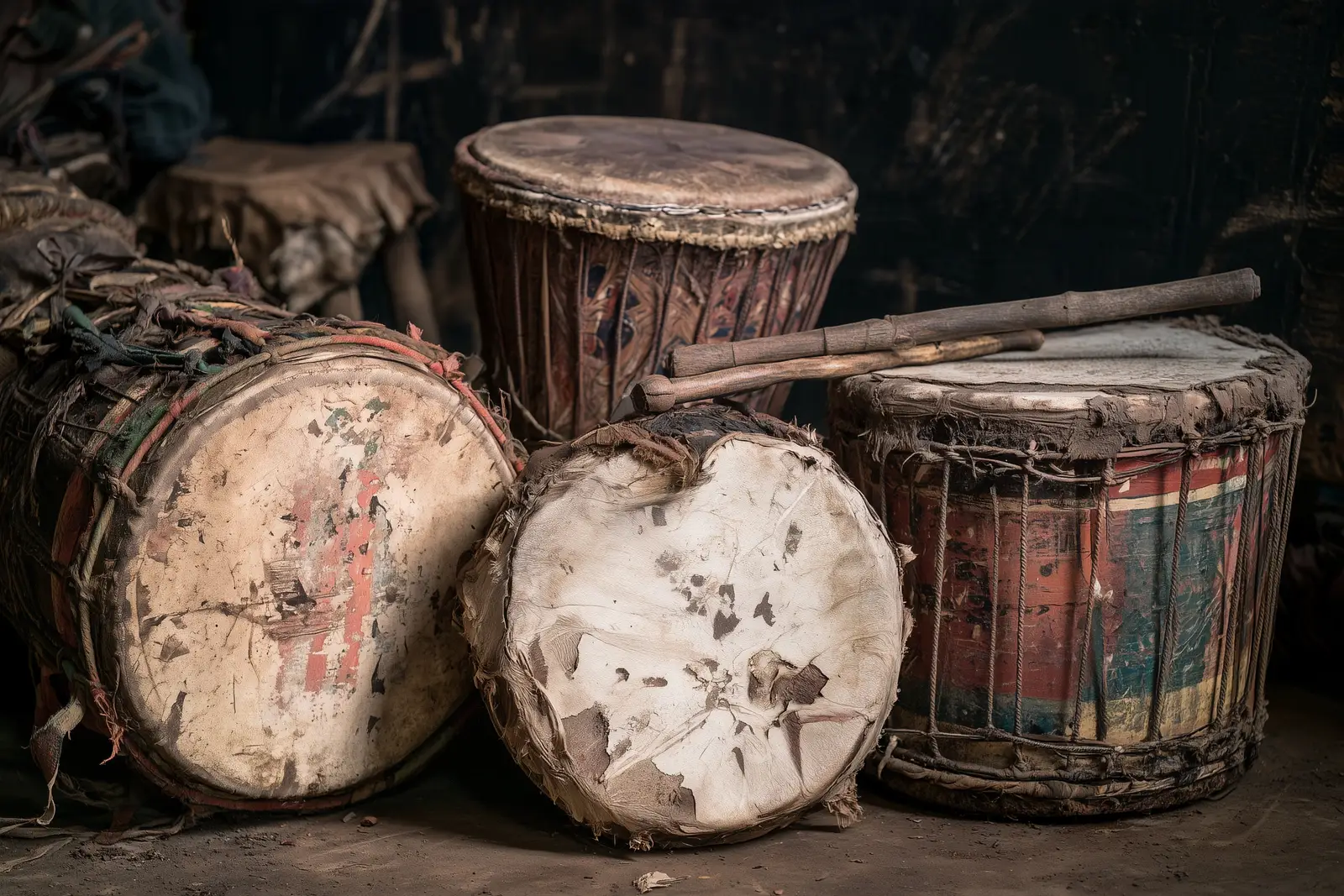
Strip a roots record back far enough and you arrive somewhere that is not really popular music at all. Nyabinghi is the drumming and chanting practice at the centre of Rastafari worship, and it predates the recording industry’s interest in any of this by decades.
Three drums, three jobs
The ensemble is built from three hand drums, and the division of labour between them is the whole architecture.
The bass drum is the largest, struck with a padded stick, and it plays sparingly. One heavy beat, then space. It is the heartbeat, and it is deliberately slow.
The funde holds a steady, unchanging two beat pattern. Its job is to not vary. In a gathering that runs for hours, the funde is the thing that keeps time when everyone else drifts.
The repeater is the small, high drum that improvises across the top, filling and answering and pushing. It carries the excitement, and it can only do so because the other two refuse to move.
Listen to that arrangement and then listen to a roots reggae rhythm section. The bass drum’s patient weight is the bass guitar. The funde’s refusal to deviate is the rhythm guitar’s chop. The repeater is where the melodic instruments and the deejay live. The relationship is not a coincidence.
Grounation
These drums are played at a grounation, a gathering that can last for days, combining drumming, chanting, scripture reading and reasoning. It is worship, not performance, and it is not really designed to be listened to from outside.
That is worth saying plainly, because there is a long history of this material being lifted for atmosphere. The drums turn up as a texture in records made by people with no connection to the practice, in much the same way that other sacred musics get borrowed. You do not have to be a member of anything to listen. It helps to know what you are listening to.
Where it surfaces
Count Ossie is the name to look for first. His work brought Nyabinghi drumming into recorded Jamaican music directly, and the records made with the Mystic Revelation of Rastafari are the clearest bridge between the grounation and the studio.
After that, listen again to Burning Spear. The chant structure, the repetition, the way a phrase is turned over and over rather than developed: that is not a songwriting quirk. It is a different tradition showing through.
Why it matters for a dance
Sound system culture inherited something specific from all this, which is the expectation that music takes time. A grounation does not build to a climax and stop. It sustains. A good dance works the same way, and the people who find dub sets boring are frequently people who arrived expecting a song and got a ceremony.